Understanding Exam Stress in Children
Exam stress occurs when students feel overwhelmed by academic pressure, expectations, or fear of poor results. While a small amount of stress can motivate students to study, too much pressure can negatively affect their confidence and performance.
Children experiencing exam stress may show signs such as irritability, lack of concentration, headaches, sleep problems, or loss of appetite. Some students may even begin to doubt their abilities and avoid studying altogether. Recognizing these signs early allows parents to step in and provide the necessary guidance and reassurance.
Understanding that every child learns differently is important. Some children need more time to grasp concepts, while others may require emotional encouragement rather than academic pressure.
1. Create a Positive Study Environment Understanding Exam Stress in Children
A calm and organized study space can greatly improve a child’s focus and productivity. Parents should ensure that their child has a quiet place to study without distractions such as television or mobile phones.Parents play an important role in helping reduce exam stress in children by providing emotional support and encouraging healthy study habits.
A well-lit desk, comfortable seating, and easy access to books and stationery help children concentrate better. When children feel comfortable in their study space, they are more likely to stay focused and motivated during exam preparation.
Parents can also encourage children to keep their study area clean and organized, which helps reduce mental clutter and improve concentration. Parents play an important role in reducing exam stress in children by creating a supportive and encouraging home environment.
2. Encourage Healthy Study Habits
Many students try to study for long hours without taking breaks, which can lead to fatigue and reduced concentration. Instead, parents should encourage structured study routines. Healthy routines such as proper sleep and regular breaks can significantly reduce exam stress in children.
For example, studying for 40–50 minutes followed by a short break helps the brain stay fresh and improves memory retention. Parents can also encourage children to revise topics regularly rather than leaving everything for the last minute.
Effective study techniques include:
- Making short notes
- Practicing past exam papers
- Summarizing important concepts
- Teaching learned topics to someone else
These strategies help students build stronger understanding and confidence. When parents communicate openly, it becomes easier to manage exam stress in children during important exams.
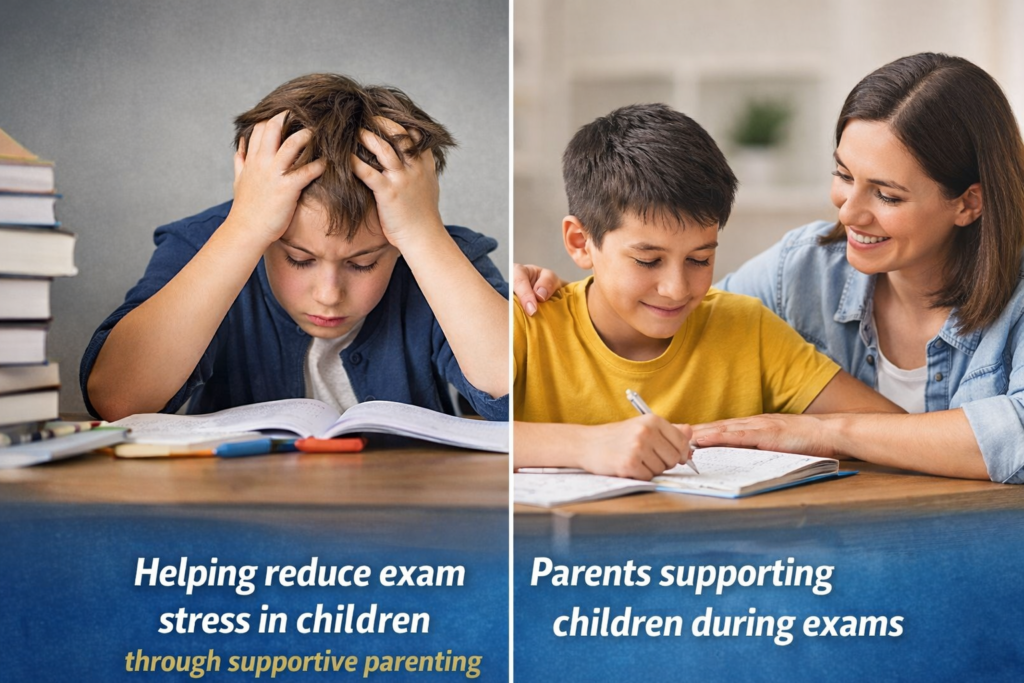
3. Provide Emotional Support
Children need emotional reassurance during exams. Many students fear disappointing their parents if they do not perform well. Parents should remind their children that effort and learning are more important than perfect scores. Understanding the causes of exam stress in children helps parents guide students with patience and confidence.
Listening patiently to children’s concerns can help them feel understood and supported. Encouraging words such as “You are doing your best” or “I believe in your abilities” can significantly boost a child’s confidence.
Open communication between parents and children creates a safe environment where students feel comfortable sharing their struggles and asking for help.
4. Promote a Healthy Lifestyle
A healthy routine plays a vital role in reducing student exam anxiety. During exam preparation, children often neglect sleep, nutrition, and physical activity. Research by the American Psychological Association shows that academic pressure can affect students’ emotional health.
Parents should encourage:
- 7–8 hours of sleep
- Nutritious meals
- Drinking enough water
- Short physical activities or walks
Regular exercise helps release stress and improves concentration. Even simple activities like stretching or a short walk can refresh the mind and improve productivity.
5. Help Children Manage Expectations
Sometimes exam stress comes from unrealistic expectations. When children feel that they must achieve perfect results, they may become anxious and overwhelmed.
Parents should help children set realistic and achievable goals. Instead of focusing only on results, parents should encourage consistent improvement and learning.
Teaching children that mistakes are part of the learning process helps them develop resilience and confidence.

6. Teach Time Management Skills
Poor time management is one of the main causes of exam stress in students. When children do not know how to plan their study time, they may feel overwhelmed by unfinished work.
Parents can help children create a simple study timetable that balances study sessions with rest and relaxation. Breaking large tasks into smaller steps makes studying more manageable and less stressful.
Time management skills not only help during exams but also prepare children for future academic and professional success.
7. Encourage Confidence and Motivation
Confidence is a key factor in academic success. Parents should celebrate small achievements and encourage their children to believe in their abilities.
Reminding children of their past successes and progress helps build self-confidence. When children feel supported and appreciated, they are more likely to stay motivated and approach exams with a positive mindset.
Parents can also encourage children to visualize success and stay focused on their goals.
Conclusion
Exam stress is a natural part of academic life, but it should never become overwhelming. With proper guidance and emotional support, children can learn to manage pressure and develop healthy study habits. Our AcademMentorship Program helps students develop confidence and effective study habits.
Parents play a crucial role in helping children navigate exam challenges. By creating a supportive environment, encouraging healthy routines, and promoting confidence, parents can help their children face exams with calmness and determination.
Supporting children during exam periods not only improves academic performance but also strengthens their emotional well-being and resilience for future challenges.