
Teaching Hundreds of Students
Teaching hundreds of students taught me that education isn’t just about completing a syllabus—it’s about changing mindsets, building confidence, and inspiring possibilities.
Teaching has never been just a profession for me—it has always been my purpose. While many people teach with their minds, I have always believed in teaching with my heart and soul. Every classroom, every student, and every challenge has shaped me into the educator and academic mentor I am today.
From teaching tiny nursery learners to mentoring senior secondary and graduation students, one lesson has remained constant: every child can learn when the teaching method matches the learner.
My Teaching Journey: From Nursery to Senior Secondary
My teaching career began as a Nursery Teacher, where I introduced young learners to the basics of writing through standing lines, sleeping lines, slanting lines, and curves. But I quickly realized that children learn best when learning feels like play.
Instead of limiting lessons to books and pencils, I introduced:
- Play-based learning
- Rhymes and phonics
- Storytelling
- Oral vocabulary activities
- Interactive classroom games
- Creative conversations
Those two years taught me that curiosity is a child’s greatest strength, and a teacher’s true role is not just to provide answers, but to nurture that curiosity until it grows into confidence, critical thinking, and a lifelong love for learning.
The Foundation of My Teaching Philosophy
After completing my B.Ed., I started teaching students from Classes 6 to 8. This age group is energetic, curious, expressive, and constantly seeking engagement.
A Milestone in My Teaching Journey
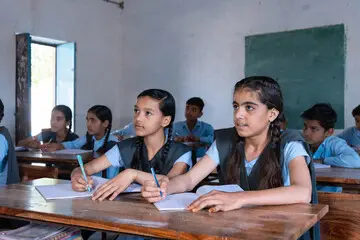
One of the most beautiful and defining experiences of my teaching journey was my two-month trainee program at Ishani Government School. It became a true milestone in my career because the senior teachers placed their trust in me and encouraged me to experiment with modern, student-centered teaching methods instead of relying only on traditional lectures.
I had the opportunity to teach students from Classes 9–12, where I transformed traditional lessons into engaging, interactive learning experiences. Rather than asking students to sit quietly and memorize concepts, I designed sessions that encouraged active participation through discussions, role plays, real-life examples, collaborative activities, and practical demonstrations.
I also incorporated question-based learning and critical thinking exercises, encouraging students to analyze concepts instead of simply remembering them for examinations. Every lesson was planned to connect classroom topics with real-life situations, helping students understand not only what they were learning but also why it mattered.
To ensure that every learner felt included, I adapted my teaching methods to suit different learning styles, provided individual guidance whenever needed, and created a classroom environment where students felt comfortable asking questions and expressing their ideas.
As a result, participation increased significantly, students became more confident in communicating their thoughts, and learning evolved from a one-way lecture into a collaborative and enjoyable experience.
My goal was to make every lesson meaningful, engaging, and easy to connect with curriculam.
The response was beyond my expectations. Students became more confident, participated enthusiastically, and looked forward to each class.
By the end of my training, many students expressed that they would miss these interactive sessions, while several teachers appreciated the fresh teaching approach and the positive change they witnessed in student engagement.
Knowing that both students and educators remembered my teaching methods long after the training ended remains one of the most rewarding achievements of my journey as an academic mentor.
- Role plays
- Group discussions
- Classroom activities
- Real-life examples
- Collaborative learning
- Interactive English lessons
When students are actively involved, they remember concepts longer and develop confidence naturally.
Nurturing Confidence Through Experiential Learning
Teaching Classes 9 and 10, and later senior secondary students (Classes 11–12), required a completely different approach. At this stage, students are preparing not only for examinations but also for higher education, future careers, and important life decisions.
To meet these evolving needs, I moved beyond traditional teaching methods and adopted a student-centered approach based on concept-based and inquiry-based learning. Instead of relying on rote memorization, students explored the why behind every concept through real-world examples, case studies, practical applications, and meaningful classroom discussions.
By encouraging curiosity and critical thinking, the classroom became a space where learners felt confident asking questions and sharing ideas. Real-life problem-solving activities helped students connect theoretical knowledge with practical situations, making learning both relevant and memorable.
As a result, their analytical skills, communication abilities, and confidence improved significantly, preparing them not only for examinations but also for future academic and professional challenges.
I also encouraged students to ask questions, challenge ideas respectfully, and develop independent thinking skills.
Alongside academic learning, I integrated career-oriented guidance, communication activities, collaborative problem-solving, and confidence-building exercises into my classes.
My goal was not only to improve examination performance but also to help students become critical thinkers, effective communicators, and self-confident individuals who were prepared for opportunities beyond the classroom.
My classroom focused on:
- Concept clarity instead of rote learning
- Critical thinking
- Communication skills
- Presentation techniques
- Individual guidance
- Exam strategies
- Confidence building
Every class became a space where students could ask questions without hesitation and learn without fear.
The Psychology Behind Effective Teaching
Every Student Deserves to Be Seen
One of the biggest lessons I learned is that teaching is not only about subjects—it is about understanding people.
Even while managing classrooms of 60–70 students, I made a conscious effort to ensure that every learner felt seen, heard, and valued. No two students learn in exactly the same way.
While some grasp concepts best through visual explanations, others thrive with hands-on activities, discussions, or practical experiences. Many simply need encouragement and reassurance before they begin believing in their own abilities.
Recognizing these differences transformed the way I approached teaching.
Rather than expecting every child to fit a single learning style, I adapted my methods to match their individual needs.
Creating an inclusive and supportive learning environment gave every student a genuine opportunity to participate, grow in confidence, and achieve success.
My Experience Beyond the Classroom
My journey did not stop inside school walls. Building More Than a Coaching Centre
As my teaching journey evolved, I took a step that brought me even closer to students and their families—I established my own offline coaching centre.
It wasn’t just a place to complete homework or prepare for examinations. It became a space where students felt heard, encouraged, and empowered.
Every class was designed to do more than improve academic performance. Alongside English and subject learning, I focused on building confidence, strengthening communication skills, developing a growth mindset, and helping students overcome self-doubt.
Many students walked in with fear of making mistakes. Over time, they walked out with the confidence to ask questions, express themselves, and believe in their own abilities.
One of the most meaningful parts of this journey was working with students from government schools. Their determination inspired me every single day.
I realised that talent is never limited by a student’s background. What many children truly need is someone who believes in them, guides them consistently, and reminds them that their dreams are achievable.
For me, education has never been about creating toppers alone—it has always been about helping every child discover their own potential.
Because every student deserves quality guidance, genuine encouragement, and a mentor who believes in them long before they begin believing in themselves.
Inclusive Teaching: Every Child Deserves a Chance
One experience that remains close to my heart was working with children who required additional support.
Although our school did not have a dedicated special educator at that time, I willingly worked with these students by modifying my teaching methods according to their learning needs.You Can visit our other blog post here to know the journey of students.
That experience reinforced my belief that every child has unique strengths.
The difference lies not in the learner, but in the teaching approach.
Teaching Students Across Every Stage of Learning
Over the years, I have taught:
- Nursery learners
- Primary students
- Middle school students
- Secondary students
- Senior secondary students
- Graduation learners
Today, I continue to mentor students from Classes 6–12 and graduation level in:
- Spoken English
- English Communication Skills
- Academic English
- CBSE English
- Personality Development
- Public Speaking
- Exam Preparation
Each stage of learning has taught me something new, making me a more adaptable and empathetic educator.
Professional Growth and Continuous Learning
Throughout my career, I have consistently invested in my own learning.I love to guide parents with students to get better perspective you just read here
I successfully qualified CTET and also cleared KVS recruitment examinations and appears DSSB Exam as well, gaining valuable experience that strengthened my understanding of modern teaching practices, classroom management, and student psychology.
For me, becoming a better teacher has always been a lifelong journey.
My Teaching Philosophy
Teaching hundreds of students from different age groups, backgrounds, and learning abilities led me to one simple conclusion:
There is no weak student. There are only different learning styles.
When teachers understand a child’s learning capacity, interests, confidence level, and pace, education becomes meaningful.
That belief continues to guide every lesson I teach.
I don’t simply prepare students for examinations.
I prepare them to communicate confidently, think independently, and believe in themselves.
Final Thoughts
Each stage of my teaching journey—from introducing nursery rhymes through playful activities to mentoring teenagers preparing for board examinations—has strengthened my belief in the transformative power of education.
Teaching is not just my career.
It is my calling.
As an Academic Mentor, I remain committed to helping every learner unlock their potential through personalised guidance, engaging teaching methods, and unwavering encouragement.
Because when a teacher believes in a child before the child believes in themselves, remarkable changes begin to happen.
Share your experince with me:
What is one teacher who changed your life, and what made them unforgettable?
Or, if you’re a parent, what quality do you value most in a teacher today?
Share your thoughts in the comments—I genuinely read every response.
Ready to support your child’s learning journey? Message me on WhatsApp: https://wa.me/919315806546
I’d be happy to discuss your child’s learning goals and how personalized academic mentoring can help them build confidence, improve performance, and achieve lasting success.